
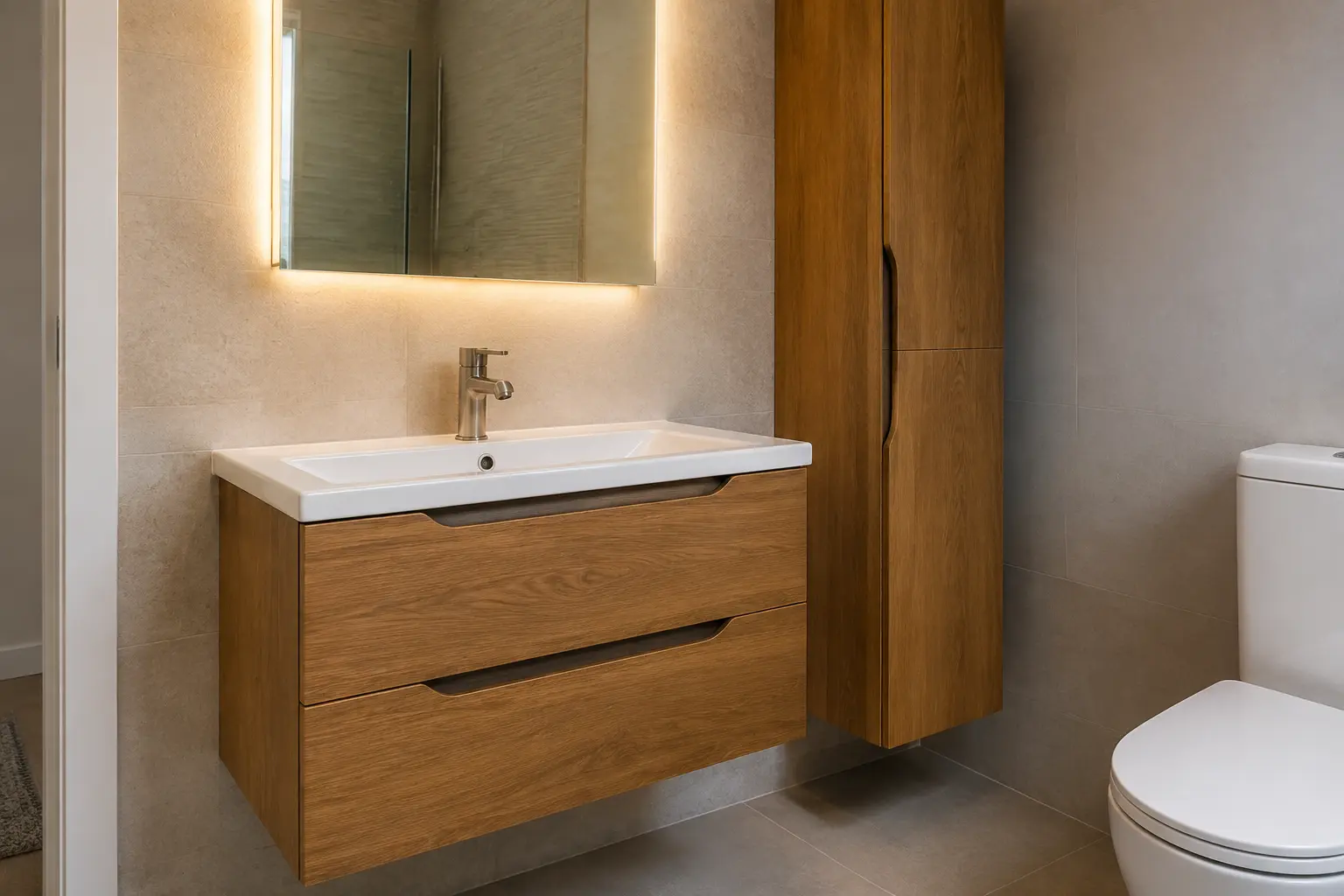
Describe What Needs to Improve
Begin with the problems you notice in the current bathroom. The mirror may be poorly lit, the shower entrance hard to see or the room slow to dry after use. Tell the designer where and when these problems occur. A decorative light or a new fan may be part of the answer, but the existing equipment and the room need checking before products are chosen.
If damp marks keep returning, do not assume they are all caused by condensation. A leak, damaged joint or building fault may need a different repair. Note when the marks appear and take photographs if they are not always visible. This gives the person inspecting the bathroom useful information and helps avoid covering an unresolved problem with a new ceiling or wall finish.
Put Useful Light at the Basin and Shower
Think about the tasks you carry out rather than simply adding more fittings. You need to see clearly at the mirror, move into the shower and use the controls. A ceiling light may illuminate the room but still leave the face shadowed at the basin. Compare general lighting with suitable mirror or task lighting, taking account of the actual layout and the people using it.
Ask a qualified electrician to advise on bathroom electrical products, positions and installation. A product’s appearance does not establish suitability near water. Include the chosen mirror and any integrated electrical features in that discussion before buying. The electrician should assess the existing installation and explain the work required; do not treat a familiar-looking replacement as automatically suitable for the same place.
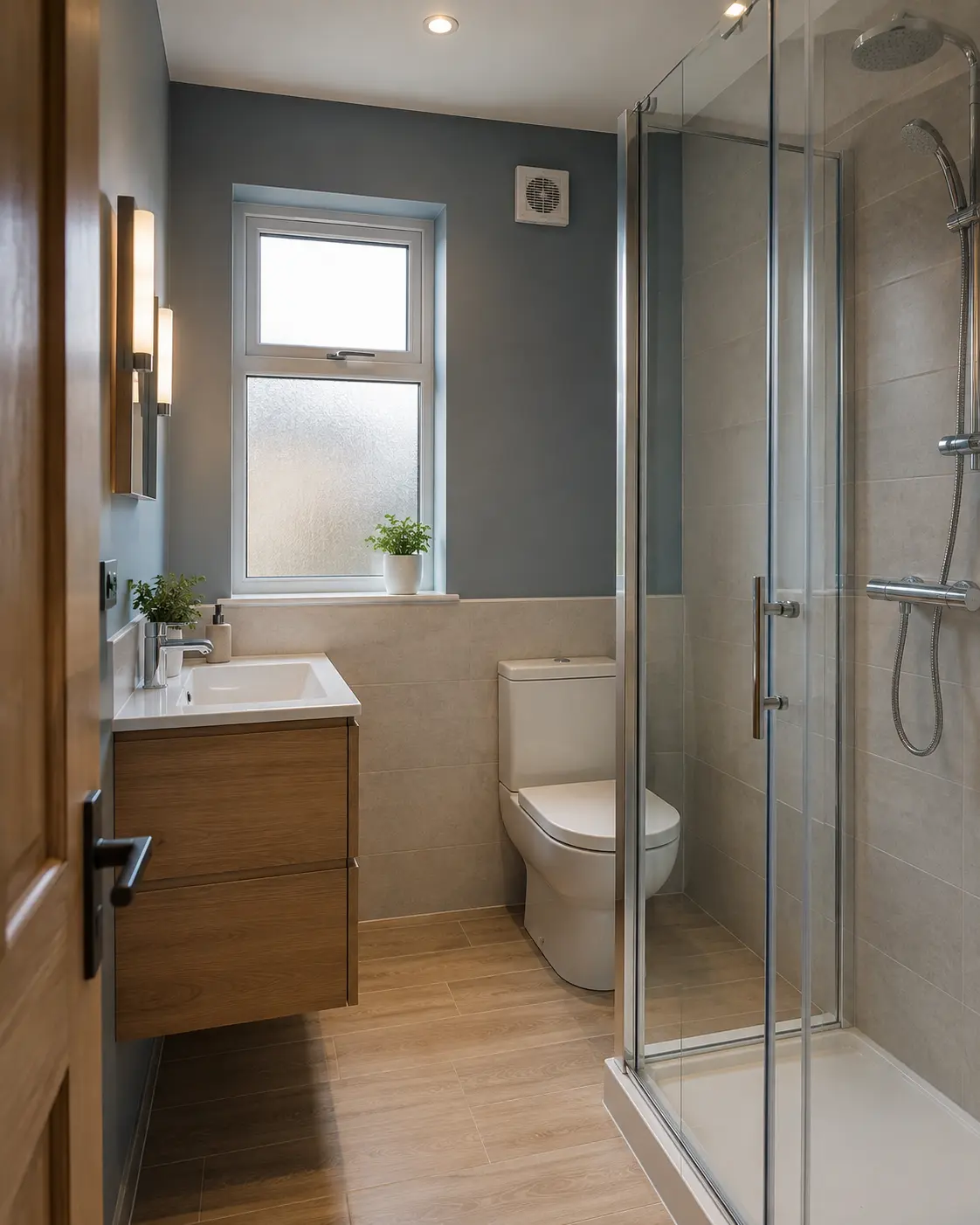
Choose Controls You Can Use Comfortably
Consider where the lights are switched and whether the controls are straightforward to reach and understand. Think about entering the room at night and, for an ensuite, disturbing someone in the bedroom. If dimming or separate lighting is proposed, check that the selected fittings and controls work together. More options are useful only when they improve the way the household actually uses the bathroom.
Have the wiring and connection arrangements planned before the finishes are completed. Concealed equipment still needs appropriate access for maintenance or replacement. Keep model details and operating instructions after fitting, especially for mirrors or lights with additional features. Ask for unfamiliar controls to be explained at handover instead of assuming that every touch switch or automatic function works like an older fitting.
Check the Fan and the Route for Damp Air
A fan grille is only the visible part of the ventilation arrangement. The fan, controls, ducting and outlet need to work with the way replacement air enters the room. Ask an appropriate installer to check the complete route when ventilation is being changed. Choosing a fan because its packaging suggests greater power may miss a restriction or fault elsewhere in the system.
Explain noise or unreliable operation, particularly if it discourages normal use. Some systems run only at certain times, while others continue after the light goes off or are intended to operate continuously. Find out which arrangement is installed in your home. Do not switch off an unfamiliar system simply because it runs longer than expected; ask how it is meant to work and be maintained.
Keep Ventilation in the Whole Bathroom Plan
New wall finishes, furniture or a changed ceiling should not block vents or make equipment difficult to reach. If the home has a wider ventilation system, alterations need to suit that system rather than follow a general tip for a single bathroom fan. Changes to windows or insulation elsewhere can also be relevant, so raise ventilation with the appropriate installer when related work is being planned.
Ask which ventilation checks and changes are included in the bathroom quote. A line saying extractor supplied does not explain whether the existing air route has been assessed. Keep recurring moisture problems connected to the agreed repair work, with responsibilities clear. A new bathroom should not simply hide old damp behind an attractive panel while leaving the cause unaddressed.
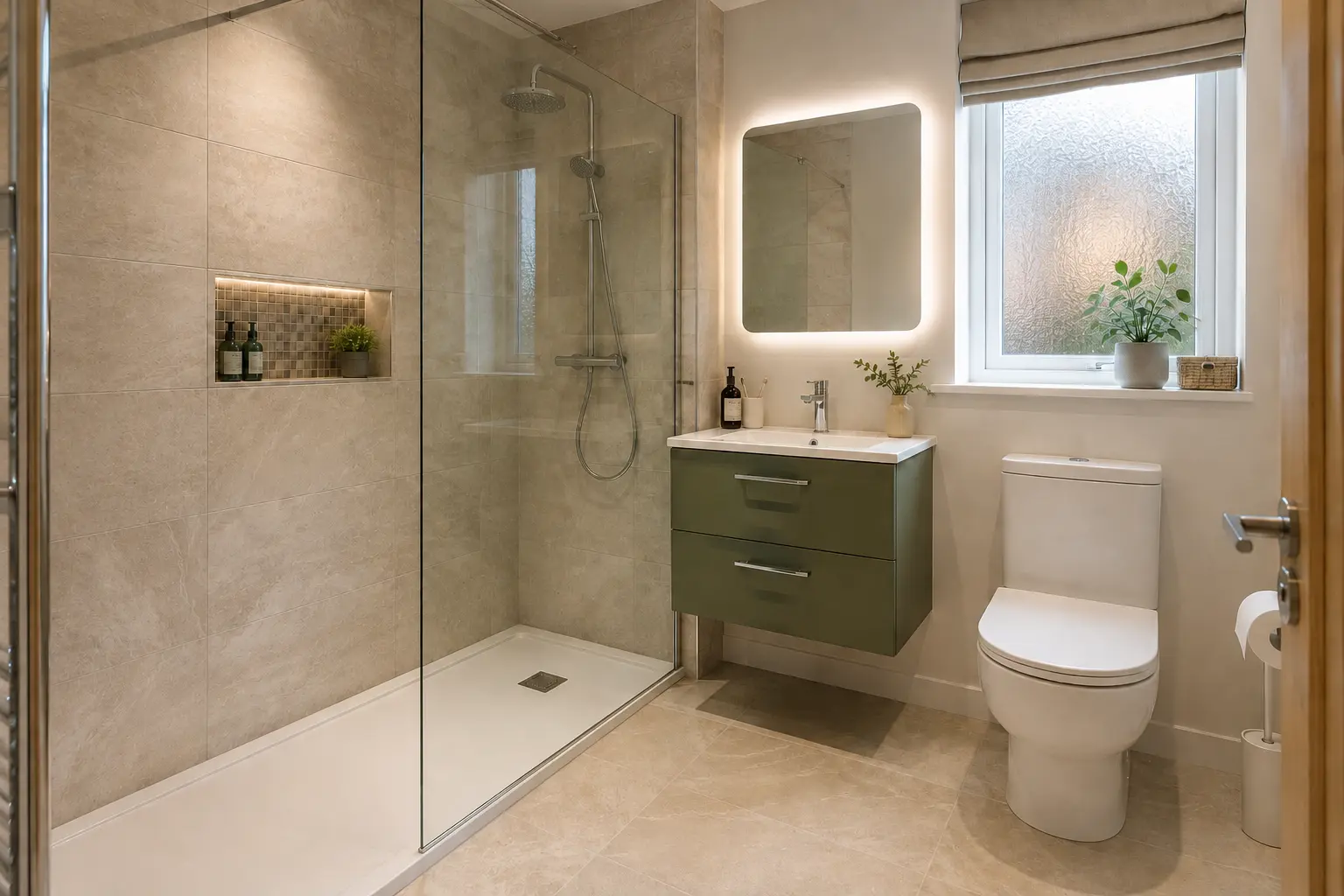
Learn the Controls and Care After Fitting
At handover, ask the installer to demonstrate the lighting and ventilation controls, including any automatic operation. Keep instructions for routine cleaning and safe isolation where the manufacturer requires it. Do not open electrical components beyond the stated care instructions. Faulty operation or damaged equipment needs suitable professional attention rather than an improvised adjustment made because the cover looks easy to remove.
Observe the room during ordinary use and report moisture that remains or marks that return. Describe the conditions and affected area so the problem can be checked. Lighting and ventilation should make washing, moving around and looking after the bathroom easier. Choose them with the layout and installation in mind, then keep the information needed to operate and maintain the finished room correctly.
Discuss the Work for Your Bathroom
For the fitting work and choices to discuss, read our heating & lighting page.
Call 0141 473 6800 or contact the bathroom team about your room in Paisley or Renfrewshire.